
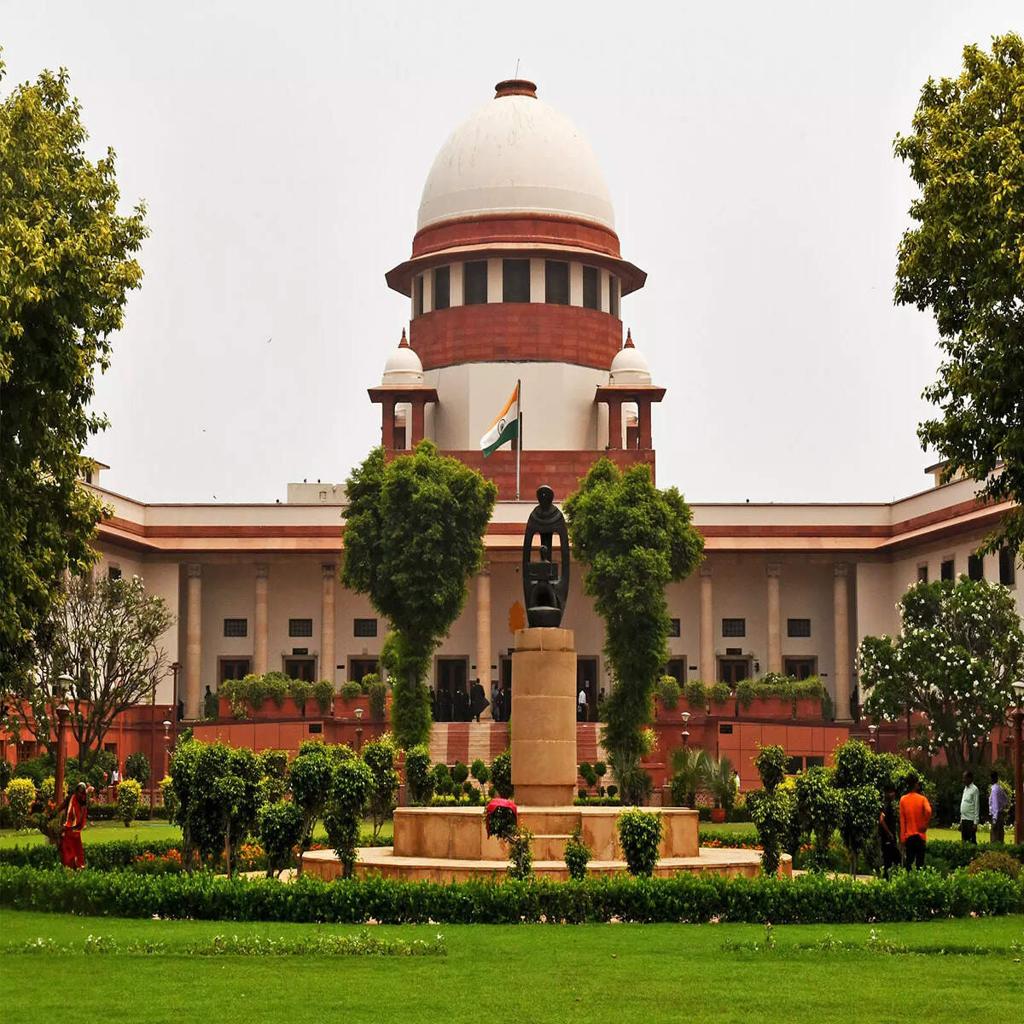
Supreme Court Reinforces Finality of SLP Orders; Upholds CoC’s Commercial Wisdom Under IBC
April 24, 2026 INSOL India Communications Committee
The Supreme Court in M/s Lamba Exports Pvt. Ltd. v. M/s Dhir Global Industries Pvt. Ltd. has reaffirmed the finality of judicial orders and the primacy of the commercial wisdom of the Committee of Creditors (CoC) under the IBC. The case..
Read More

Supreme Court Bars Set-Off of Security Deposits During IBC Moratorium
April 24, 2026 Communications Committee
The Supreme Court in Central Transmission Utility of India Ltd. v. Sumit Binani and Ors. [(2026) ibclaw.in 142 SC], has clarified that security deposits cannot be appropriated or set-off against pre-CIRP dues once the moratorium under Section 14 kicks in,..
Read More

IBC Clarified: Supreme Court Says Value Maximisation Goes Beyond Numbers
April 24, 2026 Communications Committee INSOL India.
The Supreme Court in a recent judgment in Torrent Power Limited v. Ashish Arjunkumar Rathi [(2026) ibclaw.in 109 SC] reiterated that under the IBC, the highest bid does not necessarily constitute the best resolution plan, emphasising that value maximisation is..
Read More

IBBI Overhauls Valuation Framework, Enhances Accountability of RPs and Valuers
April 24, 2026 Communications Committee INSOL India
The Insolvency and Bankruptcy Board of India (IBBI) has introduced reforms to strengthen the valuation and information disclosure framework under the IBC. These measures seek to address concerns around inconsistent valuation practices and information asymmetry faced by creditors. The reforms..
Read More

CJI Surya Kant in a recent hearing in EAS Sarma v. Union of India and others [W.P.(C) No. 1217/2025]
April 21, 2026 INSOL India - Communication Committee
CJI Surya Kant in a recent hearing in EAS Sarma v. Union of India and others [W.P.(C) No. 1217/2025], flagged serious concerns over the misuse of the IBC, noting that insolvency processes are being manipulated to enable pre-planned auctions and..
Read More

Srinivasa Reddy Velagala Vs. Sravanthi Infratech Private Limited
October 8, 2026 Communication Committee Member by Dr. Ankeeta Gupta
The period of limitation does not run ad-infinitum under the Insolvency and Bankruptcy Code, 2016. Even though the debt may cause an injury, it stops becoming a legal damage once the period of limitation has run out. Srinivasa Reddy Velagala Vs...